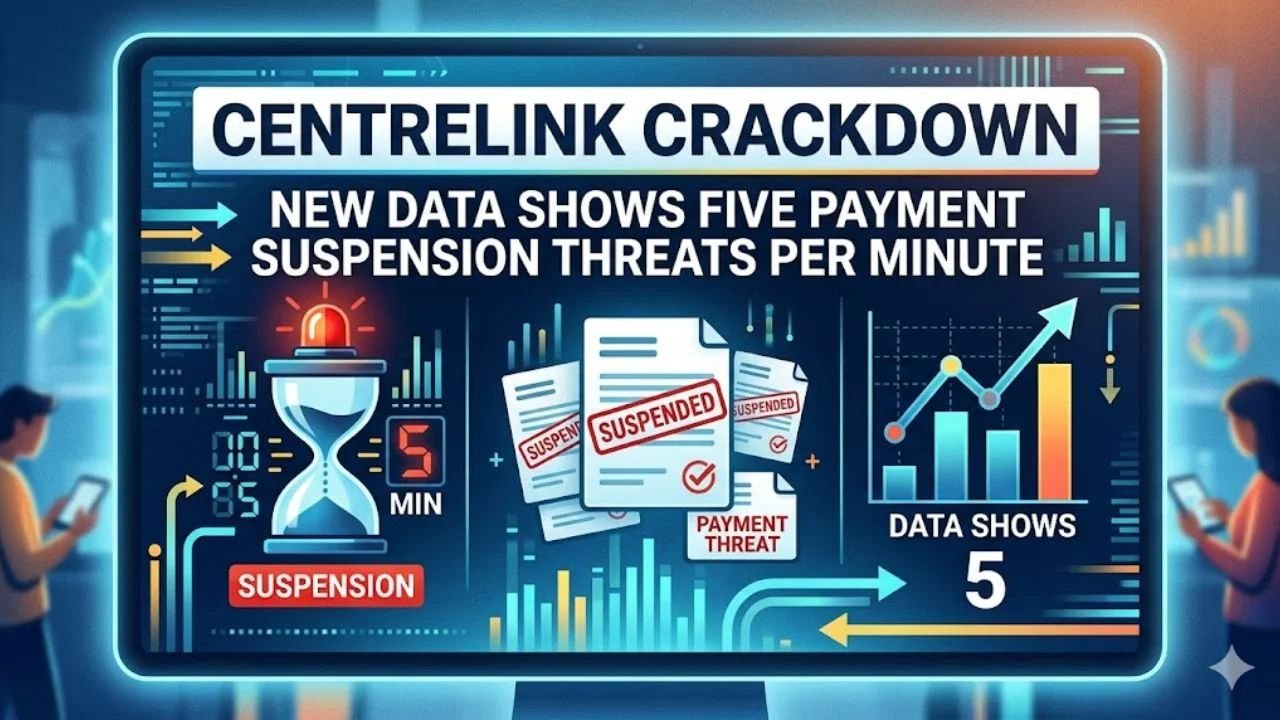
Australia’s welfare compliance system is facing renewed attention after newly examined data suggested that warnings about payment suspensions are being issued at an unusually high frequency.
The findings indicate that automated compliance checks within the Centrelink system may be generating suspension alerts multiple times every minute. While many of these warnings are later resolved without payments being stopped, advocacy organisations say the scale of the system is creating uncertainty for people who depend on income support.

For recipients relying on benefits such as JobSeeker or disability-related payments, even the possibility of a suspension can create immediate financial stress.
What the Latest Compliance Data Reveals
A recent review of welfare compliance figures highlights the sheer volume of enforcement activity within Australia’s mutual obligation system.
Between June 2024 and July 2025, more than 2.6 million suspension-related actions were recorded. When spread across the year, the numbers suggest that warnings about possible payment interruptions are being triggered more than five times per minute.

Many of these actions are generated automatically when recipients fail to complete required tasks linked to their support payments.
Compliance System Snapshot
| Indicator | Key Finding | Source |
|---|---|---|
| Total suspension-related actions | 2,683,605 actions | Policy analysis data |
| Estimated rate | Over 5 alerts per minute | Calculated from annual figures |
| Groups most affected | JobSeeker and Disability Support recipients | Advocacy reports |
| Suspensions resolved before payment loss | Around 90% | Government statements |
| Oversight concerns | System errors and unlawful cancellations identified | Ombudsman review |
Officials have stated that the majority of alerts do not lead to permanent payment loss because recipients quickly resolve the compliance issue.
However, welfare advocates argue that the volume of warnings alone can cause anxiety and confusion.
Why Suspension Warnings Are Increasing
The surge in compliance actions is closely linked to Australia’s mutual obligation framework, which requires certain welfare recipients to actively demonstrate efforts to find employment or improve work readiness.
Under this system, recipients must complete a variety of tasks to remain eligible for payments.
Common Triggers for Compliance Action
Several routine activities can trigger a suspension warning if they are missed or not reported correctly.
Missed appointments:
Failing to attend a scheduled meeting with an employment service provider can immediately trigger a compliance alert.
Incomplete job search reporting:
Recipients are typically required to document job applications or employment activities.
Delayed responses to messages:
Not responding to requests from job providers or Centrelink may result in automated suspension notices.
Failure to participate in required programs:
Training courses, employment workshops, or work placements may be mandatory under some support programs.
Advocacy organisations say that the system can sometimes feel difficult to navigate, especially for people dealing with unstable living situations or health challenges.
Groups Most Likely to Be Affected
Compliance actions appear to affect certain groups more frequently than others.
Recipients of JobSeeker Payment and Disability Support Pension are often subject to the highest number of compliance checks, particularly when they are enrolled in structured employment programs.
Community groups report that individuals facing additional barriers may struggle to keep up with frequent communication requirements.
Vulnerable Recipients
Some people may face a higher risk of suspension alerts due to personal circumstances, including:
- Cognitive or learning disabilities
- Mental health challenges
- Unstable housing situations
- Limited internet or phone access
Missing a single notification or appointment can trigger an automated warning, even if the person intended to comply.
Concerns About Wellbeing and System Trust
Welfare advocacy organisations say the pace of compliance actions can have broader impacts beyond the administrative process itself.
Even when payments are restored quickly, the uncertainty surrounding possible income loss can affect mental health and financial stability.
Repeated alerts may also reduce trust in the welfare system, particularly among individuals who rely on government support to meet basic living costs.
Oversight bodies have also raised concerns about systemic issues within the compliance framework. Reviews have identified cases where payment cancellations occurred incorrectly or without adequate explanation.
Government agencies have acknowledged these concerns and say they are working to refine compliance procedures, including allowing additional time to resolve certain issues before payments are affected.
How Recipients Can Reduce the Risk of Suspension
For people receiving Centrelink payments, staying organised and informed is the best way to avoid unexpected disruptions.
Several practical steps can help recipients stay compliant with program requirements.
Check myGov messages regularly:
Important notices about appointments or reporting requirements are often sent through the online account system.
Keep contact details updated:
Accurate phone numbers, email addresses, and mailing information help ensure that notifications are received.
Maintain records of communication:
Saving messages, screenshots, and confirmation emails can be useful if a compliance issue needs to be reviewed.
Act quickly on warning notices:
Responding promptly to suspension alerts can often resolve the issue before payments are interrupted.
If a suspension appears to have been issued incorrectly, recipients have the right to request a review through Centrelink or seek help from community legal services.
The Bottom Line
The latest compliance data highlights the scale of Australia’s welfare monitoring system and the growing debate surrounding its impact.
While officials say most suspension warnings are resolved quickly, advocacy groups argue that the volume of alerts still creates unnecessary stress for many recipients.
As scrutiny of the system continues, policymakers face increasing pressure to balance effective compliance enforcement with fairness, clarity, and support for vulnerable Australians who rely on income assistance.