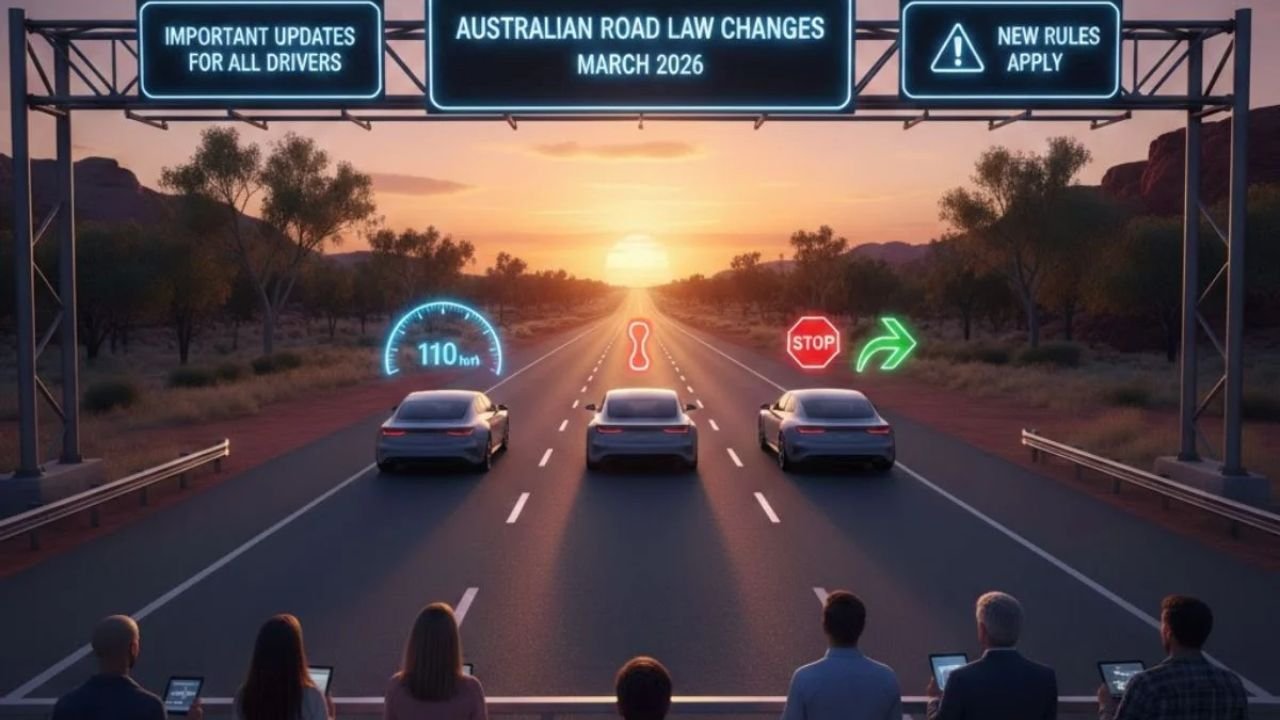
Australia is entering a new phase of road safety reform as updated traffic laws begin rolling out in 2026. These changes introduce enhanced enforcement technology, stricter penalties for dangerous driving, and clearer rules designed to protect both motorists and vulnerable road users.
The reforms are part of a broader national effort to reduce road accidents and fatalities. By combining advanced monitoring systems with stronger legal consequences, authorities aim to influence driver behaviour and encourage safer habits on Australian roads.

For drivers across the country, understanding these updates is essential to avoid fines, protect driving records, and maintain safe travel.
Why Australia Is Strengthening Road Safety Laws
Road safety agencies have long identified distraction, speeding, and seatbelt misuse as major contributors to serious traffic incidents. Despite years of public awareness campaigns, these behaviours continue to cause preventable crashes.
Government transport departments believe the solution requires both improved technology and stronger enforcement policies. By increasing the likelihood of detection and raising penalties for violations, regulators hope to deter risky driving behaviour.

At the same time, the new measures aim to ensure drivers understand the real consequences of unsafe actions behind the wheel.
The Growing Role of Smart Enforcement Technology
One of the most significant aspects of the 2026 road law reforms is the expansion of intelligent traffic monitoring systems. Across several Australian states, authorities are introducing advanced cameras that can detect multiple offences simultaneously.
Unlike traditional speed cameras, these modern systems use artificial intelligence and high-resolution imaging to identify driver behaviour in real time.
They are capable of detecting:
- Illegal mobile phone use while driving
- Drivers or passengers not wearing seatbelts
- Speeding violations
- Certain dangerous driving patterns
Some systems can even capture offences while vehicles are stationary in traffic, making it far more difficult for drivers to avoid detection.
The introduction of these technologies represents a shift toward automated, consistent enforcement that operates around the clock.
Stronger Financial Penalties for Dangerous Driving
Alongside technological upgrades, authorities are increasing penalties for several common traffic offences.
Illegal mobile phone use while driving is among the behaviours receiving the most attention. Drivers caught using handheld devices can face fines exceeding several hundred dollars along with significant demerit point penalties.
Seatbelt violations are also being targeted more aggressively. Cameras capable of identifying whether drivers and passengers are properly restrained are now being deployed on major roads.
Speeding penalties remain one of the most severe enforcement tools. High-range speeding offences can lead to fines exceeding $1,600 in serious cases, and drivers may also face licence suspension depending on the circumstances.
These stricter penalties aim to send a clear message that dangerous driving will carry meaningful consequences.
Overview of Key Traffic Enforcement Measures
| Offence Type | Example 2026 Measures | Safety Objective |
|---|---|---|
| Illegal mobile phone use | Fines above $400 and up to five demerit points with AI detection cameras operating continuously | Reduce distraction-related crashes |
| Seatbelt violations | Camera-issued fines exceeding $400 and demerit penalties | Increase seatbelt compliance |
| Speeding offences | Higher penalties for general and extreme speeding | Discourage reckless driving |
| Repeat offenders | Greater risk of licence suspension and monitoring | Address habitual unsafe driving |
These updates represent one of the most comprehensive traffic enforcement upgrades implemented in recent years.
Changes to Speed Limits in High-Risk Areas
Another important part of the road safety reforms involves adjustments to speed limits in areas where pedestrians and cyclists are most vulnerable.
Many local governments are expanding 40 km/h speed zones around residential neighbourhoods, busy pedestrian areas, and popular tourist districts.
Lower speed limits are also being introduced on some regional roads where accident data indicates a high rate of serious crashes.
Research consistently shows that reducing vehicle speed significantly decreases both the likelihood of accidents and the severity of injuries when collisions occur.
By adjusting speed limits in targeted locations, authorities hope to create safer environments for both drivers and non-motorised road users.
Greater Protection for Roadside Workers and Emergency Crews
Roadside safety rules are also being strengthened under the 2026 reforms. Drivers will now be required to slow down when passing vehicles stopped on the roadside with flashing lights.
This rule applies not only to police cars and ambulances but also to roadside assistance vehicles, tow trucks, and certain maintenance crews.
The purpose of the change is to protect workers who often operate only a short distance from moving traffic.
Motorists who fail to slow down when passing these vehicles may face penalties depending on the severity of the situation.
Increased Monitoring of Repeat Offenders
Authorities are placing greater emphasis on identifying and monitoring drivers who repeatedly violate road rules.
Under the updated system, repeat offenders may face stricter scrutiny of their driving records. Accumulating multiple violations within a short period could result in faster licence suspensions or additional restrictions.
Transport agencies believe targeting habitual offenders is a critical step toward reducing accident rates, as a small percentage of drivers are responsible for a large share of serious violations.
New Guidelines for Older Drivers
Some states are also reviewing policies related to senior drivers as part of the broader safety strategy.
Rather than automatically restricting older motorists, the focus is on ensuring they remain physically capable of driving safely. This may include periodic medical assessments, vision tests, or evaluations of driving ability.
Drivers who meet health and safety requirements will continue to retain their licences, while those experiencing medical limitations may receive conditional licences that restrict when or where they can drive.
The goal is to balance road safety with mobility and independence for older Australians.
Practical Steps Drivers Can Take to Stay Compliant
Adapting to the new rules does not require major lifestyle changes. Most penalties can be avoided by following basic safe-driving practices and remaining aware of evolving traffic regulations.
Drivers can reduce risk by adopting several simple habits:
- Avoid using mobile phones while driving
- Always wear a seatbelt and ensure passengers do the same
- Follow posted speed limits carefully
- Slow down in school zones and pedestrian areas
- Pay attention to roadside emergency or service vehicles
In addition, drivers should regularly check their demerit point status and stay informed about local rule changes issued by state transport authorities.
A Safer Future for Australian Roads
The 2026 road law reforms represent a significant step toward improving safety across Australia’s transport network. By combining advanced enforcement technology with stricter penalties, authorities hope to encourage responsible driving and reduce the number of preventable accidents.
For drivers, the message is clear: safe driving practices are more important than ever. Those who remain attentive, follow traffic laws, and respect changing road conditions will not only avoid penalties but also contribute to safer roads for everyone.
As these reforms take effect over the coming months, staying informed and adapting to the updated rules will be essential for every Australian motorist.