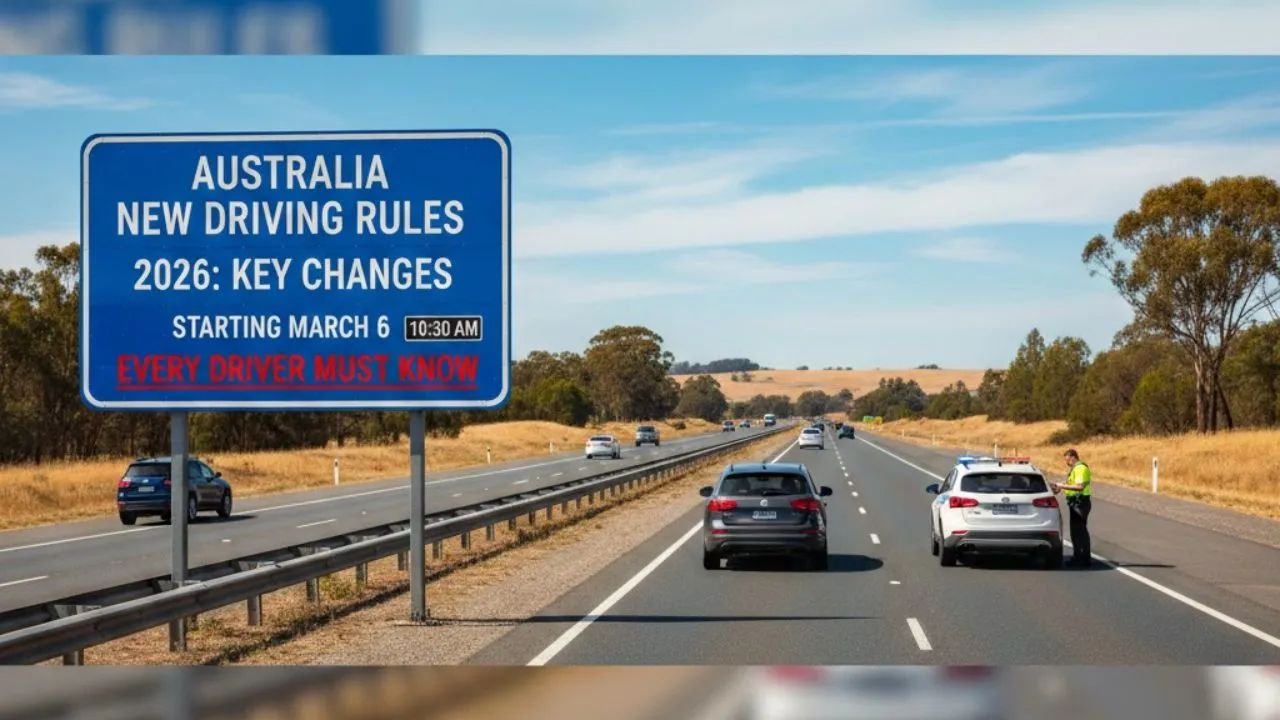
Australia is introducing a stronger set of road safety measures as part of a nationwide effort to reduce accidents and dangerous driving behaviour. Updated driving rules coming into force in 2026 are expected to tighten enforcement around speeding, mobile phone use, and driver accountability, while expanding automated monitoring across major roads.
Transport authorities say the goal is simple: make roads safer for everyone. Rising accident statistics linked to distracted driving and speeding have prompted governments to introduce tougher penalties and stricter monitoring systems.

For drivers across the country, these changes represent a shift toward stricter compliance. Understanding the updated rules will be essential to avoid penalties and stay safe behind the wheel.
Why Australia Is Introducing Stricter Road Rules
Road safety agencies have been closely analysing accident data over the past several years. A significant number of serious crashes involve driver distraction, excessive speed, or failure to follow basic road safety practices.
Mobile phone use while driving has emerged as one of the most common risk factors. Even a few seconds of distraction can dramatically increase the likelihood of a collision.

Authorities believe stronger enforcement and clearer penalties can encourage safer behaviour. By increasing fines and expanding camera technology, regulators aim to reduce risky driving and protect pedestrians, cyclists, and roadside workers.
Major Driving Law Changes Drivers Should Expect
The updated rules focus on several key safety priorities, including speed management, distraction reduction, and improved enforcement in high-risk zones.
Although each state and territory manages its own traffic laws, many of the new safety principles will apply nationwide.
Lower Speed Limits in Sensitive Areas

Speed limits are being tightened in locations where pedestrians and vulnerable road users are most at risk.
School zones and busy pedestrian districts will increasingly operate under lower speed limits, typically around 40 km/h during designated hours.
These reductions are intended to give drivers more time to react and reduce the severity of accidents if they occur.
Stricter Penalties for Mobile Phone Use
Using a mobile phone while driving remains one of the most heavily targeted offences.
Drivers caught using handheld devices behind the wheel may face fines exceeding 700 AUD along with multiple demerit points. Modern detection cameras are also making it easier for authorities to identify offenders without the need for roadside stops.
Tougher Consequences for Extreme Speeding
Drivers who exceed speed limits by a large margin may face far harsher consequences than in previous years.
Serious speeding violations can result in substantial fines, immediate licence suspension, and significant demerit point penalties.
Authorities say this approach targets the small percentage of drivers responsible for the most dangerous road behaviour.
New Safety Expectations Around Emergency Vehicles
Drivers must now slow significantly when approaching police cars, ambulances, fire trucks, or roadside service vehicles with flashing lights.
In many regions, motorists will be required to reduce speed to between 25 km/h and 40 km/h when passing these vehicles.
The rule is designed to protect emergency personnel working near traffic lanes.
Expansion of Camera-Based Enforcement
Technology is playing a growing role in Australia’s road safety strategy. Traffic monitoring systems are being expanded to detect a wider range of offences automatically.
Both fixed and mobile camera systems are now capable of identifying multiple types of violations simultaneously.
These systems can monitor:
- Speeding
- Red-light violations
- Illegal mobile phone use
- Seatbelt offences
Authorities say the improved technology allows enforcement agencies to monitor roads more effectively while maintaining fairness and accuracy.
Real-Time Demerit Point Monitoring
Another change involves better integration between camera systems and driver records.
In some regions, violations recorded by automated cameras may be linked directly to demerit point tracking systems. This means drivers who accumulate multiple offences in a short period could reach suspension thresholds more quickly.
Officials believe the system will encourage drivers to remain mindful of their behaviour behind the wheel.
Overview of Key Road Rule Updates
| Safety Area | Example Change |
|---|---|
| School and pedestrian zones | Speed limits commonly reduced to around 40 km/h |
| Mobile phone use | Fines exceeding 700 AUD plus demerit points |
| Extreme speeding | Penalties may exceed 1,600 AUD and include licence suspension |
| Passing emergency vehicles | Drivers required to slow significantly |
| Camera enforcement | Expanded systems detecting speed, phone use, and seatbelt violations |
These changes represent one of the most comprehensive road safety updates in recent years.
Drivers Most Likely to Feel the Impact
While the rules apply to every driver, certain groups may experience stronger effects due to the stricter enforcement system.
Provisional and Young Drivers
New drivers often have lower demerit point limits compared with fully licensed motorists. As a result, even one serious offence could trigger a suspension.
This makes compliance particularly important for those still in the early stages of their driving experience.
Professional Drivers
Taxi operators, rideshare drivers, and delivery workers depend on their licences to earn income.
For these drivers, accumulating demerit points or losing a licence temporarily could have immediate financial consequences.
Many professional drivers are therefore paying close attention to the updated rules.
Older Drivers
Some jurisdictions are also introducing more frequent licence renewals or medical assessments for older motorists.
These checks are intended to ensure drivers remain physically capable of operating vehicles safely as they age.
However, drivers who meet health requirements will continue to retain their licences.
Practical Tips for Avoiding Fines and Staying Safe
Adapting to the updated rules does not require dramatic lifestyle changes. Most penalties can be avoided simply by maintaining good driving habits.
Drivers can reduce risk by following several simple practices:
- Keep both hands on the steering wheel whenever possible
- Avoid using mobile phones while the vehicle is moving
- Observe all posted speed limits carefully
- Slow down in school zones and construction areas
- Stay alert when approaching emergency vehicles
Regularly checking your demerit point balance can also help drivers understand how close they are to potential suspension thresholds.
A Stronger Focus on Road Safety
Australia’s updated driving laws reflect a broader shift toward safer and more accountable road use. By combining stricter penalties with advanced monitoring technology, authorities hope to reduce the number of accidents and fatalities on the nation’s roads.
For drivers, the message is clear: distraction, excessive speed, and careless driving are becoming increasingly difficult to overlook.
Those who adapt to the new rules early are far more likely to avoid fines and maintain a safe driving record.
Ultimately, the changes aim to create safer roads for everyone—from daily commuters and families to cyclists, pedestrians, and emergency responders.